
Restoring Faded and Sun-Damaged Photographs
Faded photos are the most common thing people bring me, and often the cheapest to fix — restoring faded photos starts at £9. If you can still make out the image at all, there is almost always more detail hiding in it than you can see.
Restoring Faded and Sun-Damaged Photographs in Practice
Drag the handle to compare the original with the restored version.
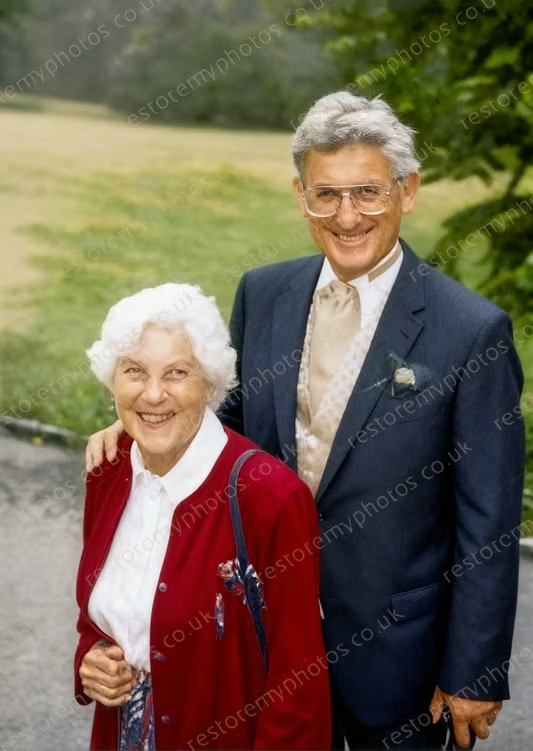
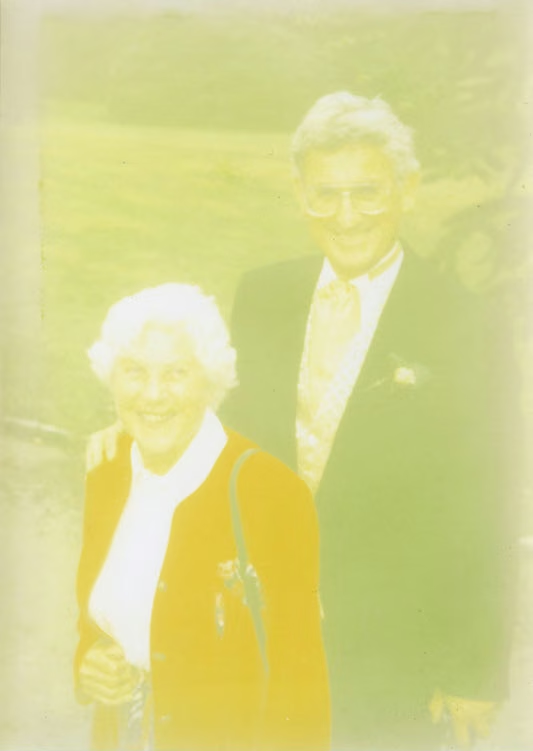
Colour lost to a yellow cast
Years of light had bleached this print to a flat yellow-green. The dye layers were rebalanced channel by channel to bring back natural skin tones and the greenery behind them.
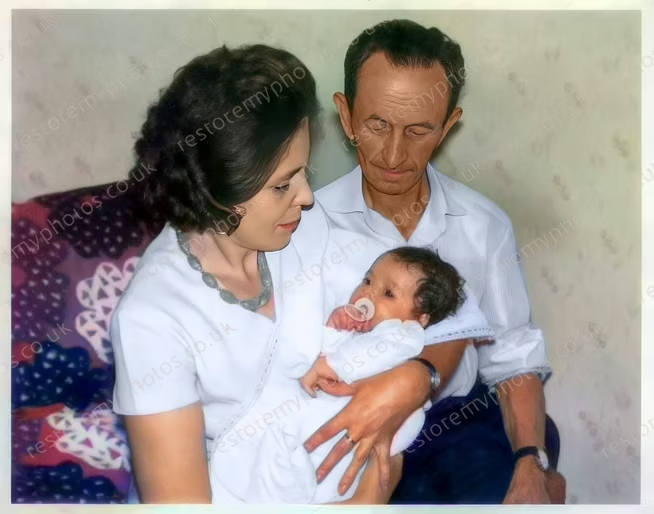
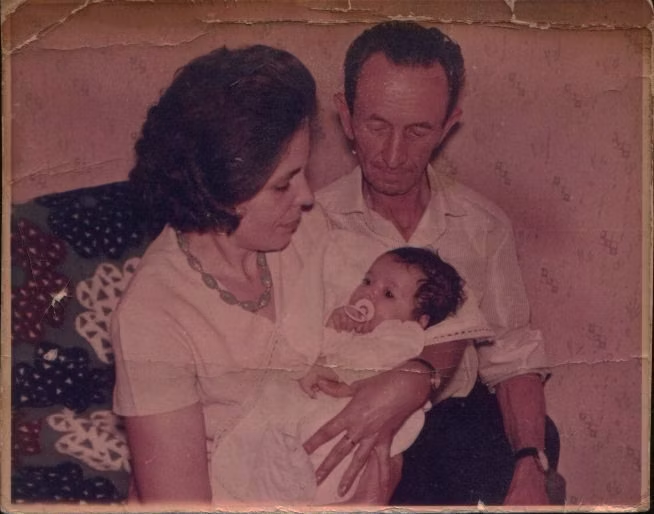
A 1965 family group
The magenta dye had outlived the others, leaving the whole print pink. Colour was rebuilt across all three faces and the crumbled right-hand edge was reconstructed.
Why Photographs Fade
Fading is chemical, not physical, and the cause determines how much can be recovered.
Sun and light exposure
A photo that hung on a wall or sat in a sunny window loses its dyes unevenly — often you can see the lighter rectangle where a frame protected the edges. Sun faded prints usually hold far more detail than they appear to, because the information is compressed rather than gone.
Yellowing and colour cast
Prints from the 1960s to the 1990s frequently shift towards orange or magenta as one dye layer degrades faster than the others. This is highly correctable: the layers are separated and rebalanced individually rather than with a single global filter.
Silver mirroring
Older black and white prints develop a metallic sheen in the darkest areas, caused by silver migrating to the surface. It looks alarming but scans out well with the right approach.
General loss of contrast
Some photographs have simply gone flat and grey with age, with no strong blacks or clean whites left. Rebuilding the tonal range is usually the single biggest improvement, and it is what makes a restored photo look sharp again.
How Faded Photo Restoration Works
Recovering a faded photograph is about rebuilding information that is still present but compressed into a narrow range of tones.
Get the most from the scan
This matters more for fading than for any other damage. A good scan captures the faint detail that a phone photo flattens away, which is why I include a free scanning guide. A better scan often means a cheaper restoration.
Rebuild the tonal range
The surviving tones are stretched back out to full black and full white. Done crudely this creates harsh, blotchy results; done properly, detail reappears in areas that looked blank.
Correct the colour layers
Where a colour cast has set in, each dye layer is corrected separately so skin tones return to something natural rather than everything being tinted at once.
Restore local detail
Finally I work area by area — a face, a sky, a patterned dress — recovering texture that a global adjustment always misses.
Faded Photo Restoration starts from £9. Payment is only taken once you have approved the proof — see full photo restoration prices.
Restoring Faded and Sun-Damaged Photographs: Common Questions
Probably not. If any image is visible at all, there is usually recoverable detail — faded photographs hold far more information than the eye picks up, and a proper scan reveals it. Send me a picture of it and I will tell you honestly what is achievable before you pay anything.
Yes, this is one of the most reliable restorations there is. The orange or magenta shift in prints from that era follows a predictable pattern, and correcting each dye layer separately brings back natural skin tones rather than just cooling the whole image down.
Not if it is done by hand. The risk with automatic tools is that they push contrast until faces look plastic. I work to what the photograph would have looked like when it was printed, which usually means restraint rather than maximum saturation.
Fading alone is normally a basic restoration, from £9. If the fading comes with tears, staining or missing areas, it moves into the £15–£25 band. You always get the exact price before I start.
Other Types of Photo Damage I Repair
Not the damage you have? These pages cover the rest.
Send me your photograph
A scan or a clear phone photo is enough to start. I will tell you honestly what can be recovered, and what it will cost, within three hours.